New

France Approves Compassionate Vitiligo Treatment with Protopic
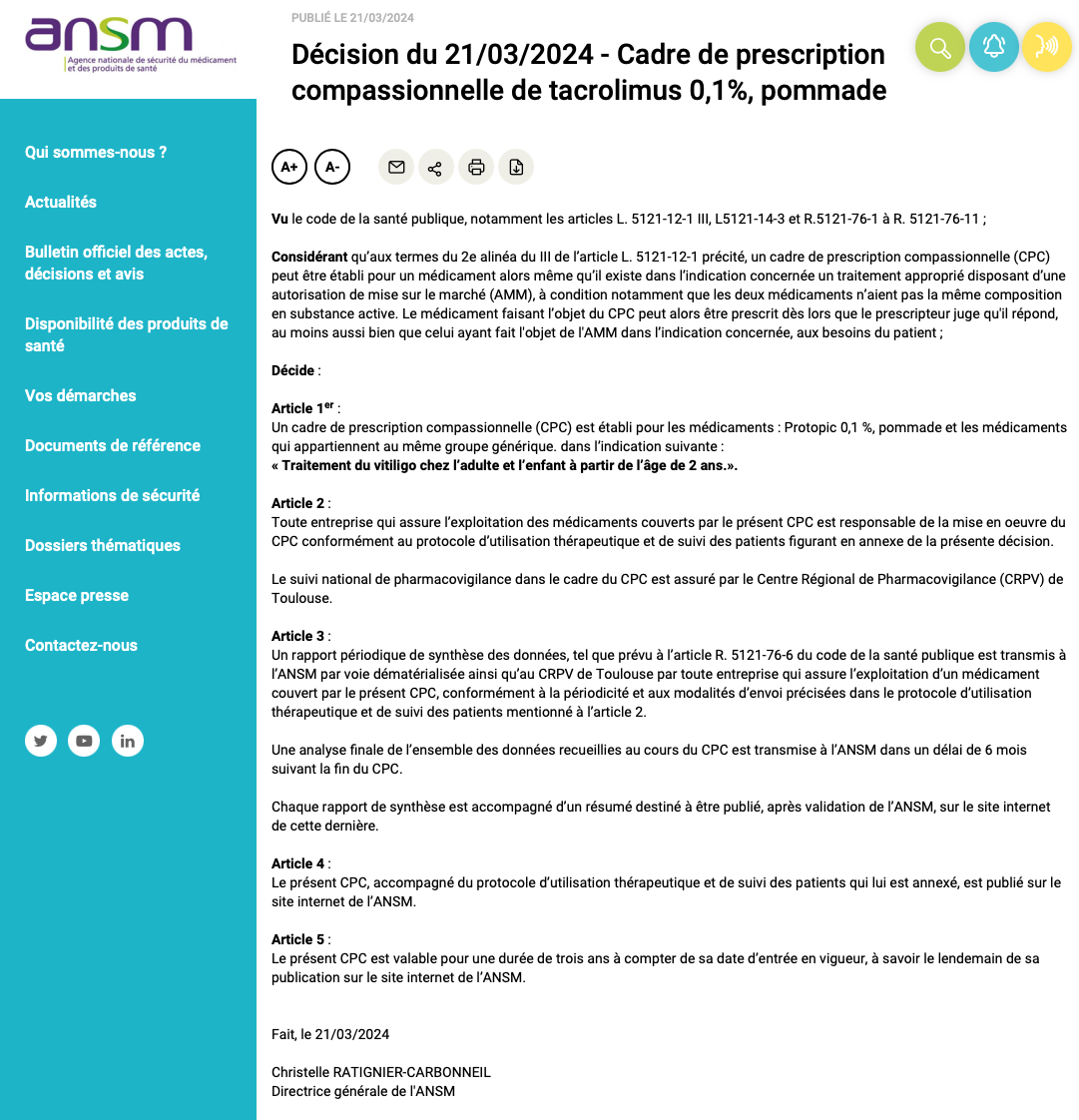
On March 21, 2024, French health authorities granted special permission for doctors to prescribe Protopic 0.1% (Tacrolimus) for treating vitiligo in adults and children over 2 years old. This kind of permission is given when there's already a different approved treatment available, but this ointment might better meet some patients' needs.
Companies Pierre Fabre Médicament and Léo Pharma A/S that make this ointment must follow certain rules for using it and keeping track of how it's working. This includes regular updates to a health monitoring center in Toulouse and providing summaries of how the treatment is going.
This special permission is set for three years from the day after the decision was announced on the ANSM website. The director general of the health authority, Christelle Ratignier-Carbonneil, signed off on this decision.
FAQOther Questions
- Is vitiligo contagious?
Vitiligo is not contagious. This means it cannot be spread from person to person through physical contact, sharing personal items, or any other means of transmission. Vitiligo i...
- What's better: laser or phototherapy?
Laser therapy is actually a type of phototherapy. Both rely on light to trigger changes in the skin, but they work differently. Phototherapy usually means a narrow-band UV (NB-U...
- Which therapy has minimal side-effects?
Dead Sea climatotherapy is a unique and highly effective treatment option for vitiligo, offering a top-tier safety profile and natural therapeutic benefits. Its combination of p...
Though it is not always easy to treat vitiligo, there is much to be gained by clearly understanding the diagnosis, the future implications, treatment options and their outcomes.
Many people deal with vitiligo while remaining in the public eye, maintaining a positive outlook, and having a successful career.
Copyright (C) Bodolóczki JúliaBy taking a little time to fill in the anonymous questionnaire, you can help researchers better understand and fight vitiligo.