New

Closing the Research Topic at Frontiers In Medicine
Most year-end posts are polite. This one is more satisfying: we get to close a real chapter.
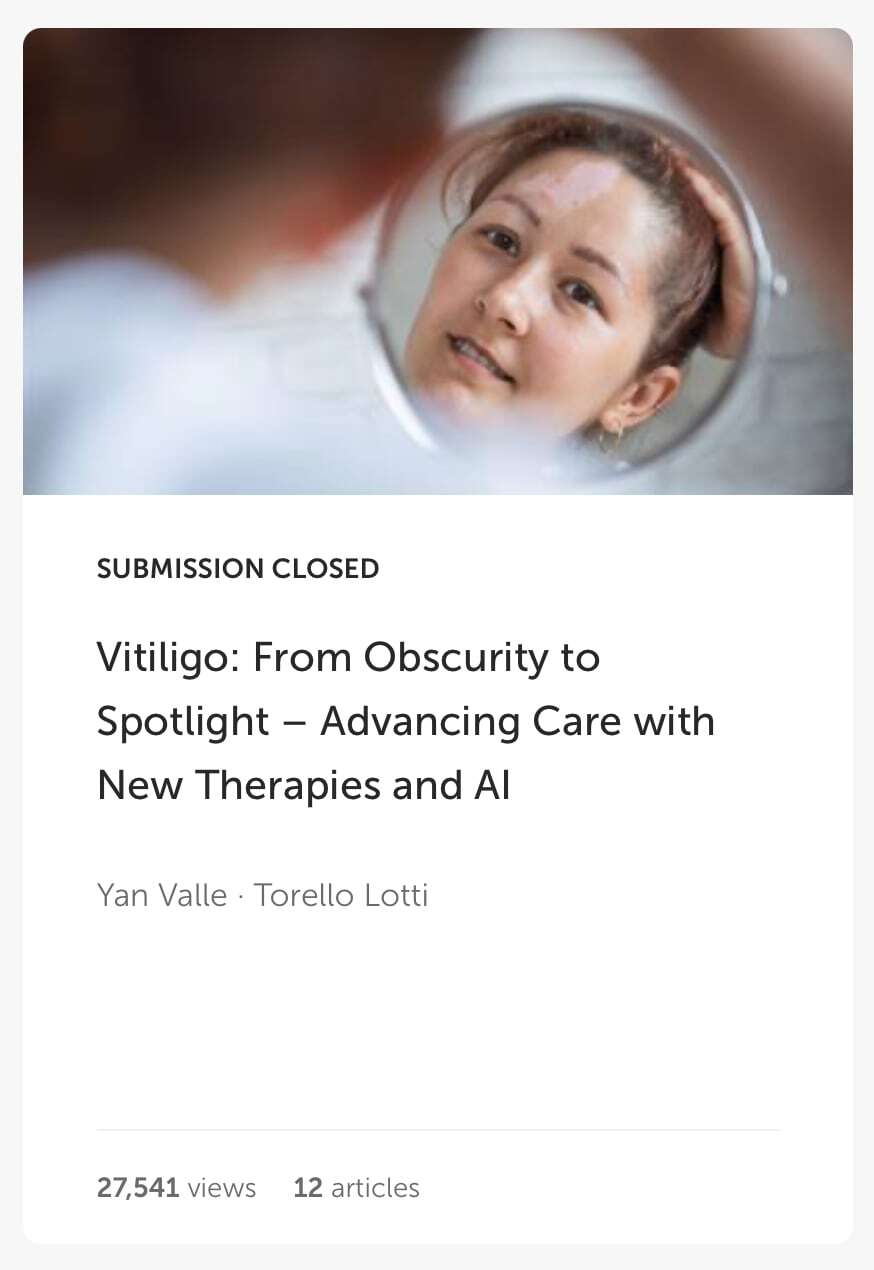
After 13 months of editing, reviews, revisions, and the kind of email threads that slowly teach you patience (or destroy it), Prof. Torello Lotti and I have officially wrapped our Frontiers in Medicine Research Topic: “Vitiligo: From Obscurity to Spotlight – Advancing Care with New Therapies and AI.”
The quick scoreboard
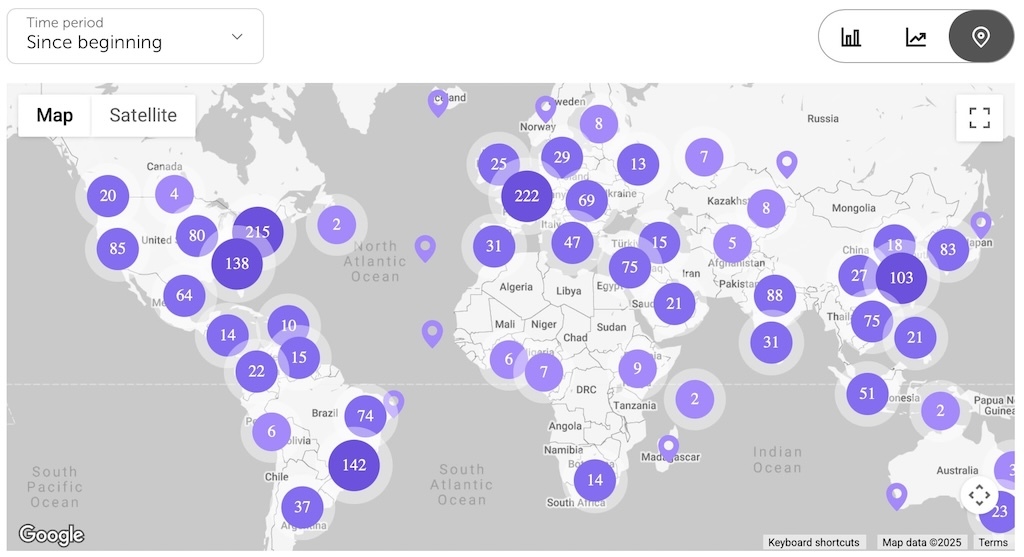
Frontiers in Medicine is a Q1 journal (Impact Factor 3). The Research Topic closed in October 2025 with 12 published articles from 59 authors, reaching roughly 27,000 total views and downloads.
From “anything goes” to a curated snapshot
This wasn’t a “print everything that lands in the inbox” exercise. The Topic attracted 21 submissions, with eight rejected after peer review (about a 40% rejection rate).
That filtering matters. The vitiligo space is finally busy enough that we can’t afford noise disguised as novelty.
In the closing editorial, we grouped the accepted papers into six thematic clusters — from AI and digital health to patient experience, quality of life, and global advocacy. If you want the one-line summary: vitiligo care is no longer “one treatment + one clinic visit.” It’s becoming an ecosystem.
A three-layer framework for modern vitiligo care
Across very different manuscripts, a few messages kept resurfacing. In the editorial, we distilled them into a simple three-layer framework:
- The base: therapies and regenerative approaches.
- The middle: digital and AI infrastructure.
- The top: the patient journey and advocacy.
Durable outcomes only happen in the overlap.
The collection also reinforces a point that’s easy to miss in the AI hype cycle: AI in vitiligo is maturing, but it only earns its keep when it is validated, explainable, and designed for clinical workflow — not just for slide decks.
Why the “spotlight” still needs structure
There’s a concept in the editorial I keep coming back to: visibility is not the same thing as progress.
You can put vitiligo filters on social media all day, but without registries, centers of excellence, and functioning patient organizations, progress stays cosmetic.
That’s not a complaint. It’s a design brief for the next decade.
A personal note
Editing a Topic like this is half scholarship, half logistics, and half therapy (yes, that’s three halves — welcome to publishing).
We’re grateful to every author, reviewer, and reader who helped make this more than a collection of buzzwords.
Vitiligo has stepped into the spotlight. The job now is to make sure the light is clarifying — not just bright.

Yan Valle
Prof. h.c., CEO VRF | Author "A No-Nonsense Guide To Vitiligo"
Keep digging
- Our announcement: Vitiligo: From Obscurity to Spotlight – Advancing Care with New Therapies and AI
- Research Topic @ Frontiers in Medicine
FAQOther Questions
- Red Wine and Vitiligo
Recent research has explored whether moderate red wine consumption might influence vitiligo risk, especially through genetic studies and large population data. What the Genetic ...
- Can chemicals cause vitiligo?
Certain chemicals can trigger vitiligo, leading to a condition known as chemical-induced vitiligo. While clinically and histologically indistinguishable from other types of viti...
- What's better: laser or phototherapy?
Laser therapy is actually a type of phototherapy. Both rely on light to trigger changes in the skin, but they work differently. Phototherapy usually means a narrow-band UV (NB-U...
Though it is not always easy to treat vitiligo, there is much to be gained by clearly understanding the diagnosis, the future implications, treatment options and their outcomes.
Many people deal with vitiligo while remaining in the public eye, maintaining a positive outlook, and having a successful career.
Copyright (C) Bodolóczki JúliaBy taking a little time to fill in the anonymous questionnaire, you can help researchers better understand and fight vitiligo.